

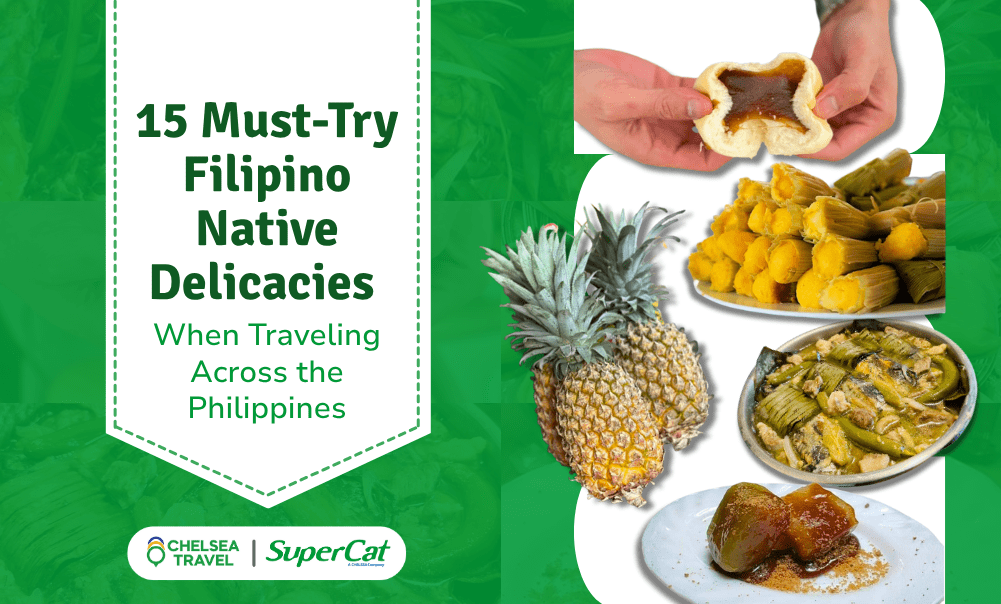
Beyond the adobo versus sinigang wars, there is so much more that Philippine cuisine has to offer. Most provinces have their own signature dish and Filipino native delicacies worth checking out. The motley of food, flavors, and combinations is a result of the rich cultural diversity across Luzon, Visayas, and Mindanao. The best way to savor these dishes is to experience it first-hand by traveling around the country.
It can be very challenging to decide which native delicacies in the Philippines to try first. While you’re planning your itinerary, consider visiting cities like Batangas, Calapan, Cebu, Ormoc, and Tagbilaran to find one-of-a-kind food selections.
15 Native Delicacies in the Philippines To Include on Your Food Trip
Batangas Delicacies
-
Sinaing na Tulingan
The classic Batangas-style sinaing na tulingan is a savory dish made of bullet tuna, slow-cooked to tenderness in a clay pot. Its broth is a tangy combination of kamias, pork fat, and spices. Batangas is known for its vibrant fishing community, which allowed them to create one of the popular Filipino native delicacies.
-
Kapeng Barako
You simply can’t leave Batangas without a pouch of kapeng barako, a local variant of Liberica coffee with a fruity and earthy flavor profile. It has a bold kick that distinguishes it from other local brews. Its taste is likened to dark chocolate and even jackfruit, reflecting a wine-line smoothness and unique aroma.
-
Batangas Lomi
Among the native delicacies in the Philippines, nothing screams ‘comfort food’ more than the authentic Batangas lomi. You can tell Batangas lomi apart from other Filipino varieties due to the absence of vegetables and abundance of meat. It is every meat lover’s dream, overflowing with pork belly, liver, heart, chicharon, kikiam, and even fish or squid balls. It is topped with sliced hard-boiled eggs and garnished with fried garlic and green onions. It is the most filling meal you can have after spending a day touring the coastlines and mountains of the province.
Calapan Delicacies
-
Coco Jam
Coconut products are highly versatile native delicacies in the Philippines. The coco jam is a product made with coconut milk and sugar. The creamy spread adds a burst of sweetness and flavor to any sandwich or rice cake. You can find big and small jars at Merl’s Native Delicacies in Calapan.
-
Suman sa Lihiya
You’ve probably heard of suman, one of the most common Filipino native delicacies. It comes in different varieties, like the suman sa lihiya that is popular in Oriental Mindoro. This type of suman combines glutinous rice with lye water (lihiya) to enhance its chewiness. It is best paired with native coco jam. In fact, Merl’s also includes small packets of coco jam in their suman products.
-
Ginataang Kuhol
Kuhol or snail isn’t such a common ingredient in most local dishes, but for provinces in central and southern Luzon, it is the star of the show. Ginataang kuhol is made up of cooked freshwater snails, coconut milk, and pepper. Snails are commonly found as pests in rice fields, but as an effort to manage their growth, farmers have turned them into one of the most scrumptious native delicacies in Philippines.
Cebu Delicacies
-
Lechon Cebu
It’s impossible to skip out on the quintessential Cebu dish: the lechon. Roasted pig is one of the Filipino native food delicacies you can find all over the country, but Cebu has made it extra special by generously stuffing each pig with a flavorful combination of ingredients, herbs, and spices. A bit of tender meat and crunchy golden skin will give you a taste of lemongrass, onion, and garlic — yes, even without the sauce!
-
Pintos
Craving a corn snack? Try the pintos, a native delicacy in the Philippines and pride of Bogo City, Cebu. It is made of ground corn, coconut milk, and sugar, wrapped in corn husk and steamed to perfection. It is a sweet, chewy food celebrated in its own Pintos Festival from 2008 to 2020. Due to restrictions during the pandemic, it was unfortunately replaced with the Kuyayang Festival. That doesn’t stop you from finding pintos all over the province, though.
-
Utan
Veggie lovers will appreciate the utan (sometimes called utan bisaya or law-uy), a healthy dish filled with various vegetables like eggplant, gabi, green beans, okra, tomato, and squash. It is also combined with spinach or malunggay leaves, fish, and spices. Not only is this a yummy addition to every meal, but also a nutritious dish to balance your health.
Ormoc Delicacies
-
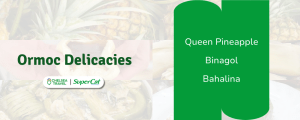
Queen Pineapple
Ormoc takes pride in its pineapple products, particularly the famed Queen Pineapple, which is a smaller, much sweeter variant of the common pineapple. Visit Ormoc during the Piña Festival to catch a festive celebration of the tropical fruit. The event pays homage to the abundant harvest through dance performances, pageants, cultural contests, and pineapple product promotion.
-
Binagol
The binagol is a recipe from Eastern Visayas known for its unique shape and preparation. It is made from a dough composed of grated taro or talyan, glutinous rice flour, condensed milk, and egg. The dough is then filled with latik (caramelized coconut) and steamed inside a coconut shell to achieve its dome-like shape. It is a budget-friendly pasalubong that is sold near the Pier of Ormoc and various stalls throughout the city.
-
Bahalina
Bahalina is another one of the coconut native delicacies in the Philippines. It is a type of coconut wine made from fermented sap. It is recognized by its rich orange-brown color, mildly bitter, tangy taste, and its said medicinal benefits. It is more affordable compared to commercial alcoholic drinks, but its good quality is what makes it popular among the locals.
Tagbilaran Delicacies
-
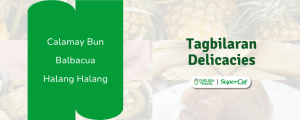
Calamay Bun
When you’re looking for something sweet and tasty in Bohol, pick up a box of Cocoberry’s calamay bun in Tagbilaran City. Calamay is a sticky, sweet mixture of glutinous rice, coconut milk, brown sugar, and sometimes peanuts. Filipino native delicacies like this have been given an extra upgrade by wrapping it in a soft bun, making it a fluffy treat that satisfies your cravings.
-
Balbacua
Steaming broths are ideal for warming up the body as the ‘ber’ months roll in. This is your sign to try the balbacua, one of the native delicacies in the Philippines that can be found in Bohol. It is mainly composed of beef trotters, ribs, or oxtail. Its flavor is enhanced with peanut butter, tausi, and pineapple, giving it a rich, sweet and tangy flavor.
-
Halang Halang
Spice up your Visayas trip with halang-halang, another Tagbilaran dish that combines chili pepper and coconut milk in a savory broth. It is made with chicken meat, lemongrass, ginger, and papaya, which helps achieve a more refreshing taste compared to regular ginataang manok.
No matter where you are in the Philippines, you can never leave without an empty stomach. Discovering traditional Filipino native delicacies lets you diversify your taste buds, and at the same time, increases your appreciation for the local culture and lifestyle of the wonderful provinces in the country.
ALSO READ: 7 Unique Tagbilaran Delicacies to Complete Your Bohol Food Trip
Start Your Food Trip Today with SuperCat
Discover your new favorite Filipino native food delicacies by embarking on a journey with SuperCat Fast Ferries. Sail aboard speedy fastcrafts to destinations like Batangas, Calapan, Cebu, Ormoc, and Tagbilaran, where you can fall in love with the variety of flavors and aromatic spices in every meal. View our daily trip schedule here and book via the Chelsea Travel website today!
META DESCRIPTION
Explore the vibrant diversity of Filipino native delicacies during your travels. From savory stews to sweet coconut treats, there is something for every taste bud.